




Part Load Transport: What Is the Difference Between LTL, PTL and FTL Freight?
Not every shipment requires a full truck. When sending a few boxes, one pallet or several pallets, a more cost-effective solution is part load transport. In this case, the vehicle space is shared with cargo from other customers, so you only pay for the space your shipment actually occupies.
Professional part load transport offers a flexible solution for both smaller and larger shipments, with deliveries available across Lithuania, the Baltic States and throughout Europe.
What Are Part Loads?
Part loads are shipments that do not occupy the entire vehicle. Cargo from several customers can be consolidated and transported in the same truck, making more efficient use of the available capacity.
This type of transport is suitable when shipping:
- one box or pallet;
- several Euro pallets;
- a larger shipment occupying only part of the trailer;
- regular shipments that do not require the full capacity of a truck.
How Does Part Load Transport Differ from Other Transport Options?
The main difference is the amount of vehicle space allocated to the shipment. Depending on the size of the shipment, freight can be divided into several categories.
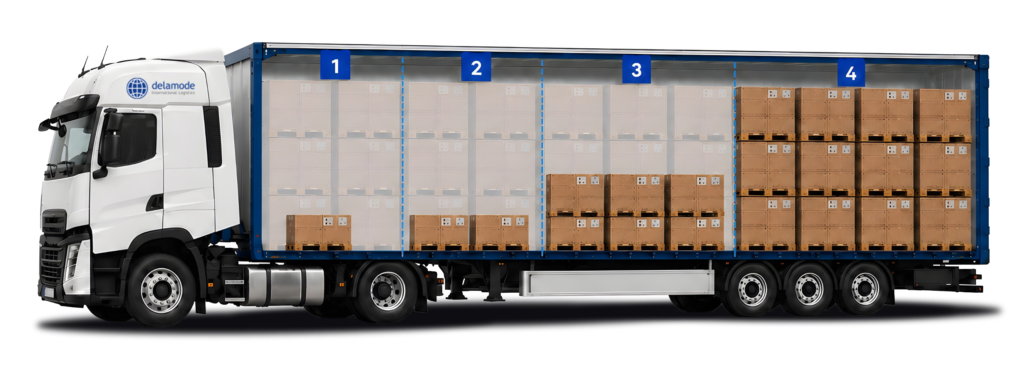
1. Groupage freight
This refers to a small shipment, such as a single box or one pallet. Groupage shipments are usually consolidated at a terminal together with other cargo travelling in the same direction.
2. LTL freight
LTL freight (Less Than Truckload) occupies only a small part of the truck. This may include several pallets that do not require a dedicated vehicle. The illustration shows an indicative example of 2–5 pallets. LTL transport can help reduce costs, as the customer pays only for the space allocated to their shipment.
3. PTL freight
PTL freight (Part Truckload) refers to larger part loads that occupy a significant portion of the trailer but still do not require the full capacity of a truck. An indicative example would be around 6 pallets or approximately 3 loading metres (LDM). PTL transport is often chosen when a shipment is too large for standard groupage transport, but a full truck would be unnecessary.
4. FTL freight
FTL freight (Full Truckload) uses the entire vehicle. A standard trailer can typically carry up to 33 Euro pallets or approximately 13.6 loading metres (LDM). This option is suitable for larger shipments or when the customer requires a dedicated truck.
When should you choose LTL freight transport?
Part load transport is most suitable when a shipment does not fill the entire vehicle and booking a dedicated truck would not be cost-effective. It is a particularly practical solution for regular shipments of smaller quantities of goods, stock replenishment or deliveries to multiple consignees.
Transport costs typically depend on the cargo weight, dimensions, number of pallets, space occupied, route and any additional services required.
Reliable Part Load Transport
Well-planned part load transport helps reduce transport costs, make more efficient use of vehicle capacity and organise both one-off and regular shipments with greater flexibility. The Delamode Baltics team selects the most suitable solution based on shipment size, route and required delivery time – from a single box or pallet to LTL, PTL or full truckload transport.